Campaigns
Campaigns
When 20 Community-Based Justice Advocates took their resolutions to the Human Rights Commission, the Legal Aid Board, and the Western Area Rural District Council, few expected Parliament to respond within weeks.
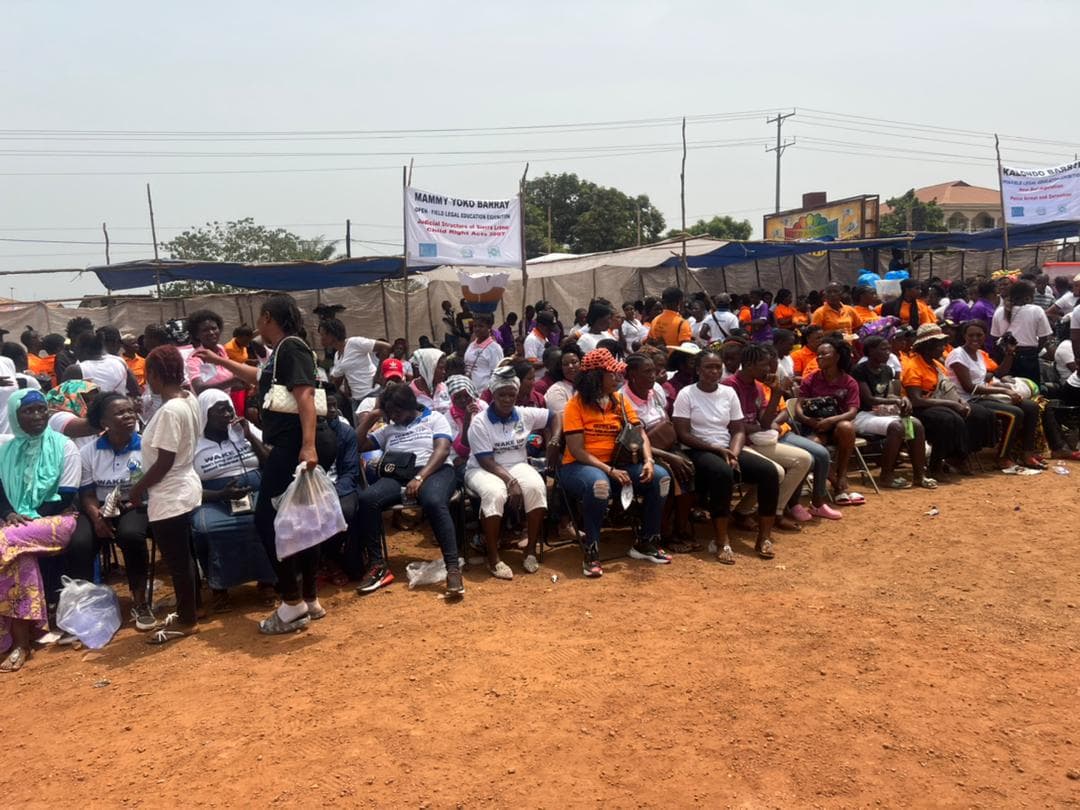
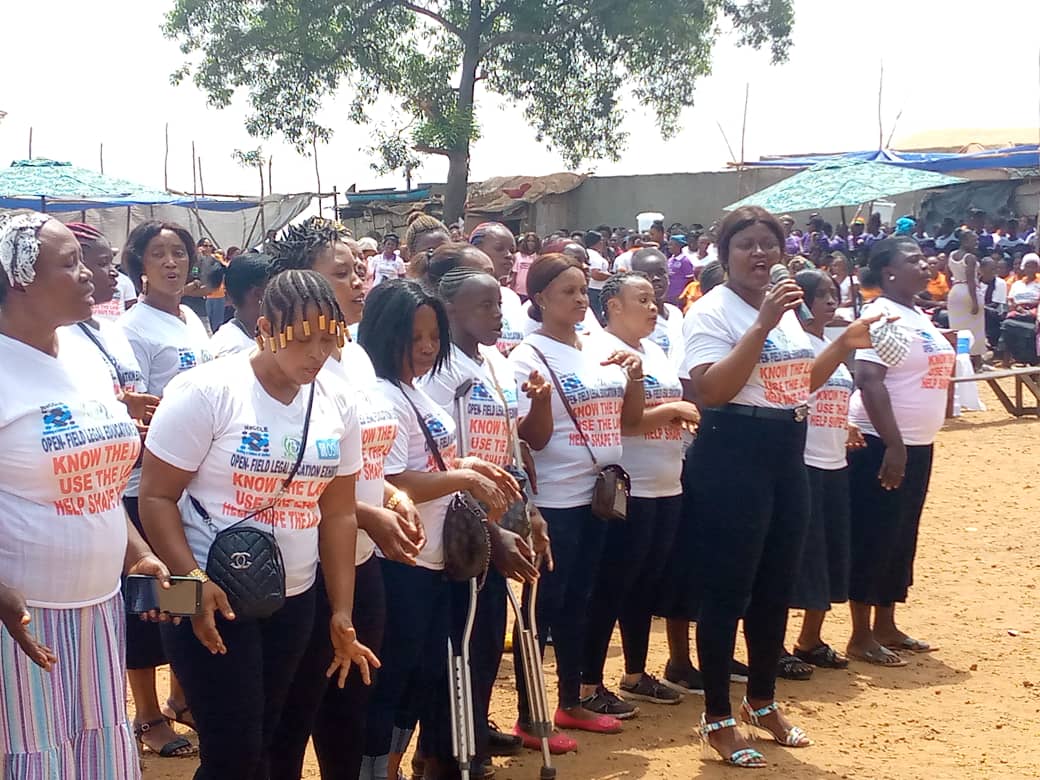
On 21 August 2019, twenty women wearing "Community-Based Justice Advocate" shirts walked into the Human Rights Commission of Sierra Leone carrying a position paper. Their central demand: end impunity around sexual penetration, rape, and early child marriage — by increasing prosecutions and conviction rates for Sexual and Gender-Based Violence (SGBV) cases, ending all forms of out-of-court compromise for such cases, and calling on Parliament to ratify a pending amendment to the Sexual Offences Act 2012.
The Community-Based Justice Advocates (CBJAs) — themselves former petty traders who had risen through LEWAF's legal and economic empowerment program — didn't stop at one institution. They carried the same message to the Legal Aid Board of Sierra Leone, calling for an end to dubious out-of-court settlements of rape and sexual penetration cases by family members, local chiefs, and community stakeholders, and for stronger enforcement of maintenance agreements against fathers who abandon their children. They also engaged the Western Area Rural District Council, where the Chairman personally pledged to continue working with police to protect women's rights in the district.
These engagements didn't stay confined to meeting rooms. They went viral across Sierra Leone through national television, radio, WhatsApp, Facebook, and print media. Weeks later, on Thursday, 19th September 2019, Parliament of Sierra Leone passed the Sexual Offences (Amendment) Bill into law.
Two more concrete commitments followed: the Western Area Rural District Council reinforced its commitment to enforce bylaws protecting women and girls from exploitation and abuse, and the Legal Aid Board reaffirmed its commitment to bring men to justice for abandoning their families, backed by fact-based evidence the CBJAs had helped surface.
Women who understand their rights and earn extra income are more likely to initiate advocacy action for systemic change — and that is exactly what happened.
It's a rare and powerful sequence: community legal education, leading to economic empowerment, leading to organized advocacy, leading to a change in national law — driven not by professional lobbyists, but by women who, a year earlier, were selling goods from market stalls in Waterloo and Freetown.
Share this story